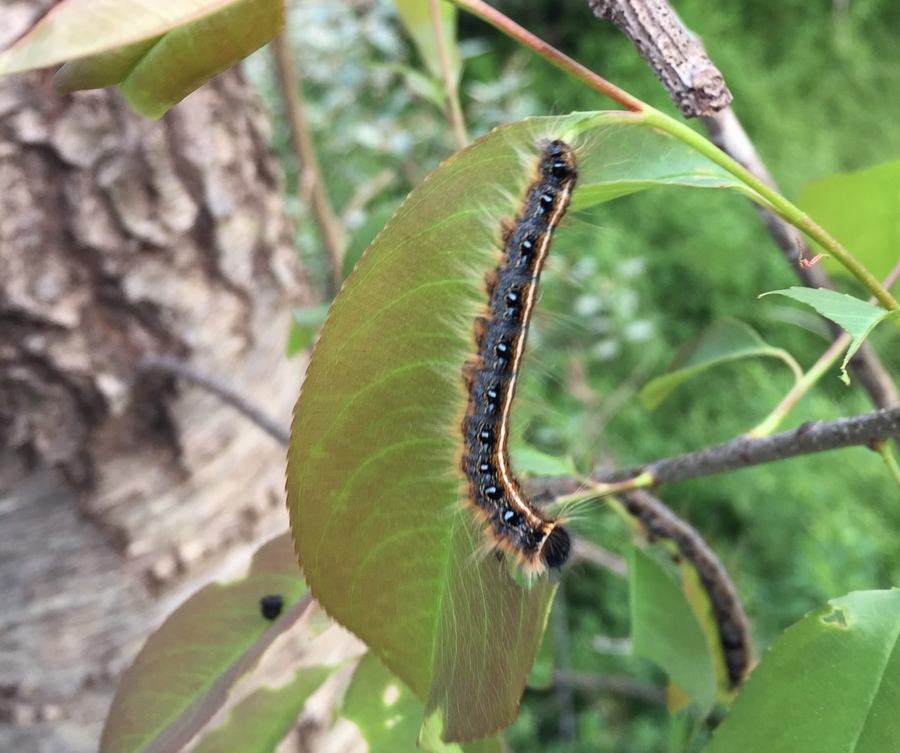
Spring is early this year. We know it, the plants know it and guess what? The Eastern Tent Caterpillar knows it too. Eastern tent caterpillars are somewhat hairy and black with gold, white and blue markings. There is a white stripe down the back. The caterpillars grow up to almost 2 inches long and they’re out of their 1” long white/yellow silk cocoons looking for tasty new leaves to eat.
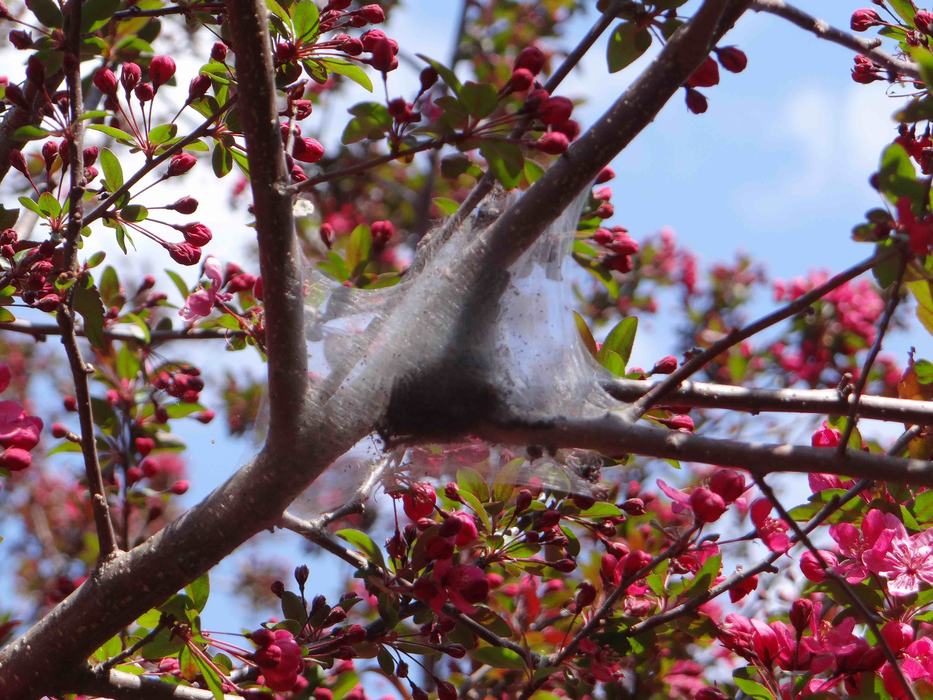
Found throughout eastern North America, you’ll see eastern tent caterpillars on mainly cherry, apple, and crabapple trees, hawthorn and maple, as well as some others. The caterpillars emerge from eggs laid the previous year, and spin a silk webbing in the crotches of tree branches (where the branch meets the trunk, or a small branch meets a larger one). As the caterpillars grow, they will continue to spin the silk webbing around their tent-like nest, adding several layers to expand its size. The caterpillars will leave the nest several times a day to look for food on days when the weather is nice, but will return to the nest at night. They feed in groups and may completely strip the new leaves from trees. Trees defoliated for several years by eastern tent caterpillars may weaken as the leaves aren’t there to function as the “food conversion factory” for the plant.
No food to supply fuel……well, there you go. Literally.
After about six weeks, the caterpillars leave the web nest and will spin individual cocoons on nearby trees, fence posts, or buildings. Once inside the cocoon, the caterpillar develops into the pupal stage. In early summer, adult moths molt from the pupal stage, emerge and fly away from the cocoons to mate and lay eggs. Caterpillars will emerge from these eggs the following spring in time with the new leaf food sources, and begin the life cycle all over again.