Since beavers were successfully reintroduced to North Carolina in 1939, this native species has thrived, benefitting people and wildlife by creating wetland habitat, reducing erosion, and improving water quality across the state. However, damage to property caused by beaver activity can be substantial and costly. The Beaver Management Assistance Program (BMAP) aims to help manage beaver-related problems on private and public lands. Because of practical and ecological considerations, the program is not designed to eradicate beavers; rather its focus is to assist the NC Department of Transportation, local governments, and private landholders in addressing specific beaver damage issues. BMAP specialists work to educate customers about a variety of beaver management options, including exclusion, pond levelers, and other nonlethal techniques. When deemed necessary, they will remove beavers and/or dams using humane and environmentally acceptable techniques.
NC Beaver Management Assistance Program (BMAP): Obtaining Services
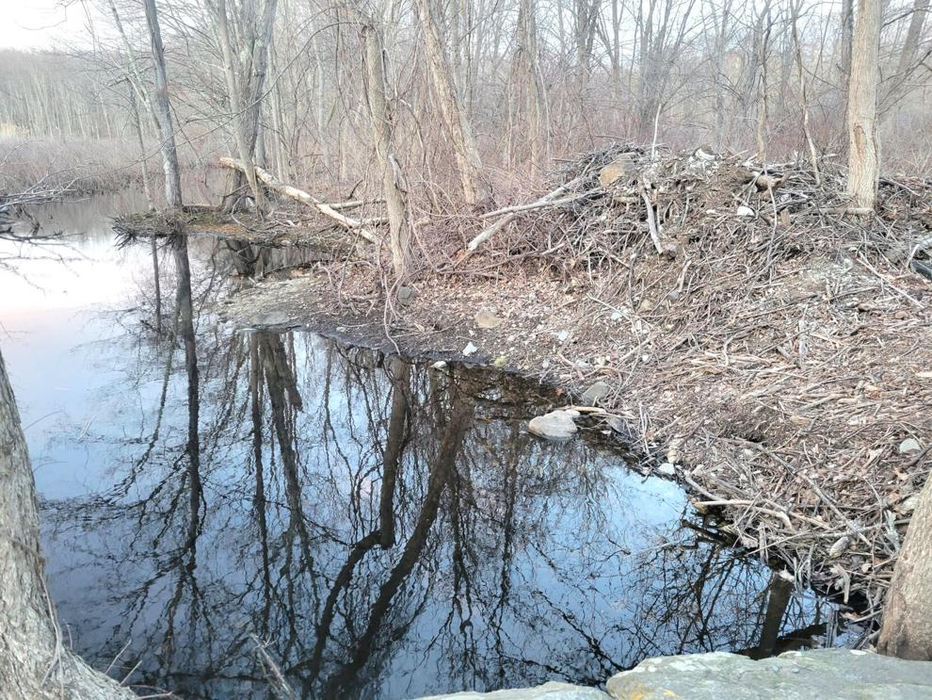
Beavers can contribute to stopping up local waterways,
leading to nearby flooding.
Landholder Cost-Share Landholders pay the following cost-share fees for services: • $25 per site visit • $150 per dam removed. Initial damage assessments are provided at no charge. Services average up to 10 site visits over a 30-day period to resolve the problem. After 15 site visits, costs to the landholder increase to the full market value of beaver management services. Landholders who are willing to manage beavers themselves are provided individual training at no cost. Jackson County Government has contributed $6,000 for FY 23/24 to assist with the majority of the BMAP expenses for the citizens of Jackson County. Please keep in mind, beavers are a benefit to the natural environment by producing wildlife habitat for certain animals and aquatic life and filters water down into the water table to recharge the groundwater. However too much water can cause flooding.
For more assistance with BMAP please contact the Jackson County Extension Director at 828-586-4009 or email "robert_hawk@ncsu.edu"
Written By