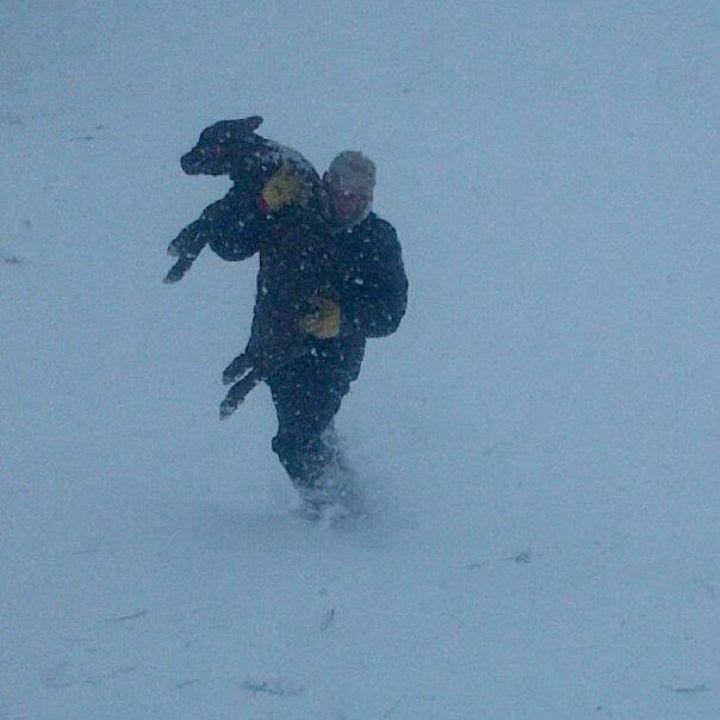
- “Reciprocity is the Rule.” Being neighborly is a two-way street. The road you help plow this weekend from a Saturday/Sunday snowfall helps everyone in your neighborhood get to work come Monday. If you have the equipment, plowing neighborhood roads and neighbor driveways could be a lifesaver for many.
- “Work Together.” Rural residents who come together often have more success as a community than those who go it alone. Working collectively makes light work for everyone, while giving you and your neighbors individual freedom. Adjacent landowners can work collectively to help with delivering firewood as an example or going to the grocery for those whom can’t get down their road.
- “Respect Agriculture.” Understand that some practices, such as a cattlemen hauling hay to feed their or their neighbors cattle on a cold winter morning or running farm machinery during the dark are common practices and necessary for agriculture operations to exist in our community. Also, keep in mind these agriculture operations help maintain the rural characteristics we’ve come to appreciate. The farmer helps keep us all alive and gives us open space to view year around. “No farms, no food.”
- “Reduce Tensions.” Try to maintain peace by showing respect for each other. One way is to control your livestock and pets from roaming onto others’ properties. Another example to reduce anxiety during the stressful holidays and inclement weather is to lend a hand by checking on others during cold waves or providing extra food to those less fortunate.
- “Honor Privacy and Individual Responsibility.” People are often unaware of private property lines; however, it is still the responsibility of the individual to know whose land they are on regardless if it is fenced or not. Perhaps getting to know your neighbor is the best means to mend fences and community relationships/ Research maps closely. Remember to always get permission before entering private lands during a hunt or gathering firewood.
- “Be Prepared and Self-Reliant” Consider that the nearest emergency services may be 30 or more minutes away or that the road you’re driving on today might be impassable when the next snowstorm strikes. Some help may take a couple of days to reach you if a major snowstorm strikes such as the “Blizzard of 1993.” Have extra food and water on hand that lasts from 2-3 days to 2-3 weeks. At these times the only help you’ll have is yourself. Having snow chains or cables, shovel, blankets and extra food/water in your vehicle is another example of being prepared for the worst of winter.
Since 1914, the underlying philosophy of the national cooperative system has been “to help people help themselves” by taking the university to the people, especially in rural America. In keeping with that American spirit of independence and being neighborly, the Jackson and Swain County Cooperative Extension offer information to help the citizens who wish to follow in the footsteps of those rugged pioneers. To that end, we can help provide you with the information you need to improve your life by becoming more self-reliant and community minded through agriculture, home economics and youth development.
Please contact the N.C. Cooperative Extension, Jackson or Swain County Centers at 586-4009 or 488-3848 or email robert_hawk@ncsu.edu for more information. Submitted by Robert J. Hawk, County Extension Director, N.C. Cooperative Extension, Jackson and Swain County Centers. Article content from the North Carolina Cooperative Extension and Colorado State University Extension.